
Matching screen content to key store moments
Digital signage can do more than display messages. It can shape how customers move, choose and experience a space.
Used well, it welcomes people in, highlights key products, supports navigation and delivers timely, relevant information at exactly the right moment.
Take a grocery store as an example. Across modern grocery environments, digital signage helps welcome shoppers, highlight fresh food choices, support navigation and share timely updates. And the same principles apply just as well to fashion, electronics, DIY or any other retail environment.
Content with a clear purpose
The most effective digital signage isn't just about promotions. Screens and content are strategically planned around how customers move through the store and what each area needs to achieve.
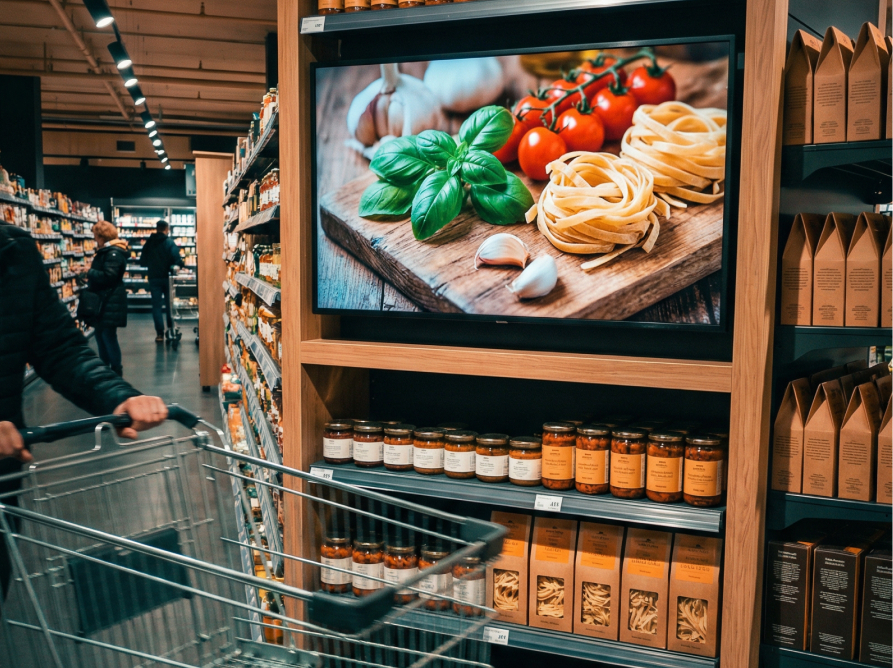
At the entrance and in window-facing areas, screens help attract attention, welcome customers and create a strong first impression.
In deli and takeaway areas, digital menu boards and food videos show weekly offers, fresh meals and product options while customers wait.
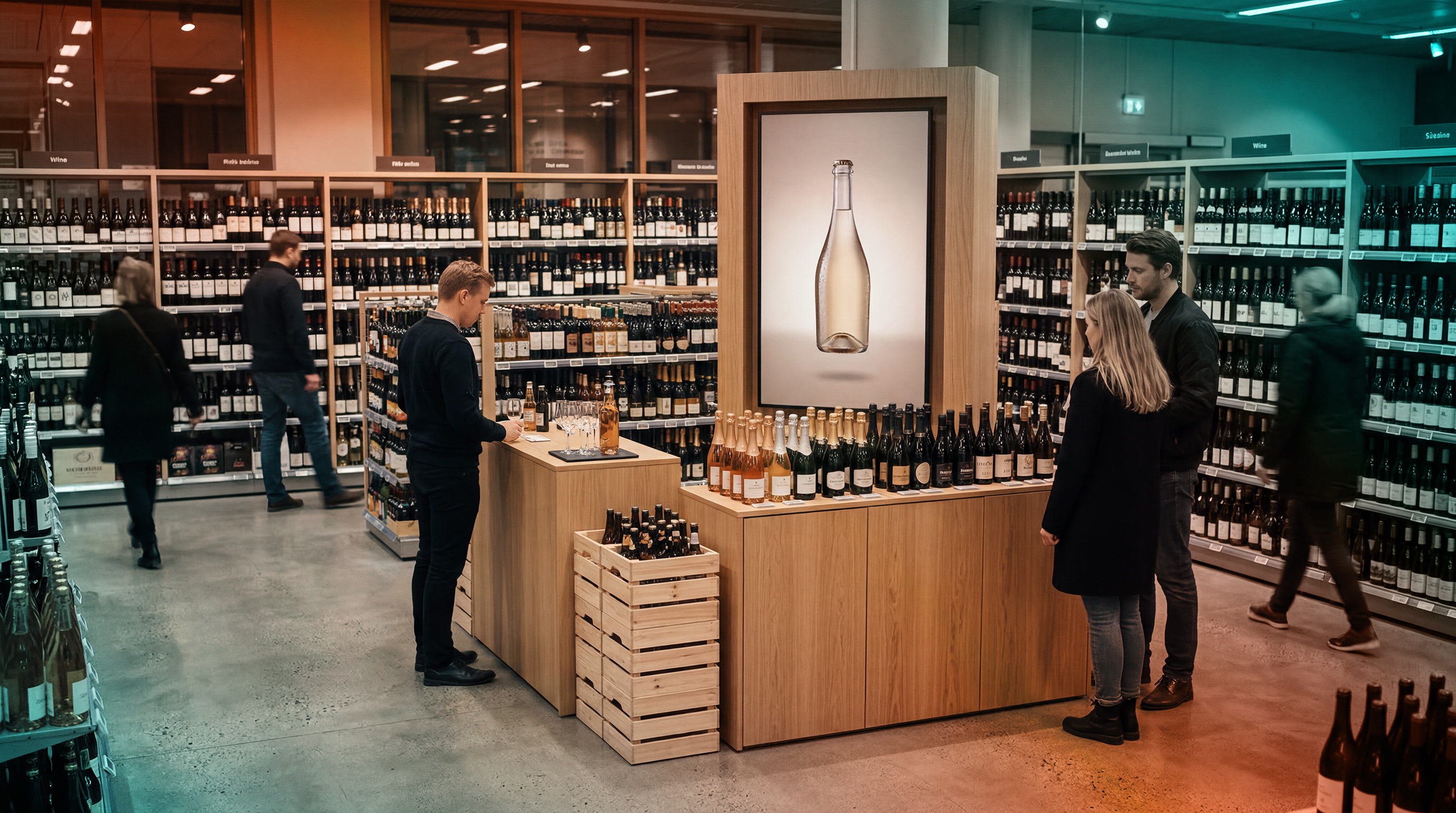
In wine sections and speciality areas, screens can promote tastings, share useful product information or supplier stories. This can help customers discover new/alternative products they may have otherwise overlooked.
In larger or multi-level stores, digital displays can also help guide customers to different areas.
These are grocery retail examples, but the same thinking applies across any retail environment.
Applying this to your Store
Think about the key moments in your own store. Every store has moments where customers need something different from the space. They may be entering, choosing, waiting, exploring or finding their way.
Successful in store digital communication works best when the content matches the location and the customer's needs at that moment.
At the entrance, the message should help draw people in. Near service counters, it should support decisions. In speciality areas, it can encourage customers to explore more. In larger or busier stores, it can also guide movement through the space.
When communication is planned around the customer journey, it becomes part of the store experience instead of just another display channel.
Practical uses
- Draw Attention: Catch attention in entrances, windows or high-traffic areas
- Support Decisions: Help customers understand choices, offers or next steps
- Guide Movement: Help people find departments, counters, floors or service areas
- Promote Key Offers: Feature fresh food, premium ranges, local suppliers etc
- Cross-selling: Promote related products, offers or actions near key decision points
- Adapt to Each Location: Tailor content to the store layout, audience, time of day and local needs
Want to see these principles in action? Explore our grocery retail digital signage cases for real examples of screens shaping the shopping experience.